Educational resources
Collection of educational resources about groundwater monitoring and aquifer testing techniques
Groundwater monitoring
Regular measurements of groundwater levels, quality, and other parameters to assess the groundwater condition over time
Note: the images below are generated with AI support and have only the role of placeholder during the setup of the website. They shall be replaced during the course of updating the website.
Construction of groundwater monitoring wells
Step-by-step installation of wells for groundwater monitoring and sampling
Groundwater monitoring wells are constructed through a sequence of carefully controlled steps to ensure reliable groundwater sampling and measurement. Proper drilling, casing, screen installation, filter placement, and sealing are essential to protect the aquifer from contamination and to obtain accurate long-term monitoring data.
Learn more →
Representative groundwater sampling
Collect a water sample that accurately represents aquifer water quality
Representative groundwater sampling is the process of collecting groundwater samples that accurately reflect the physical and chemical conditions of the aquifer. Proper sampling procedures are essential to obtain reliable data for groundwater quality assessment and monitoring.
Learn more →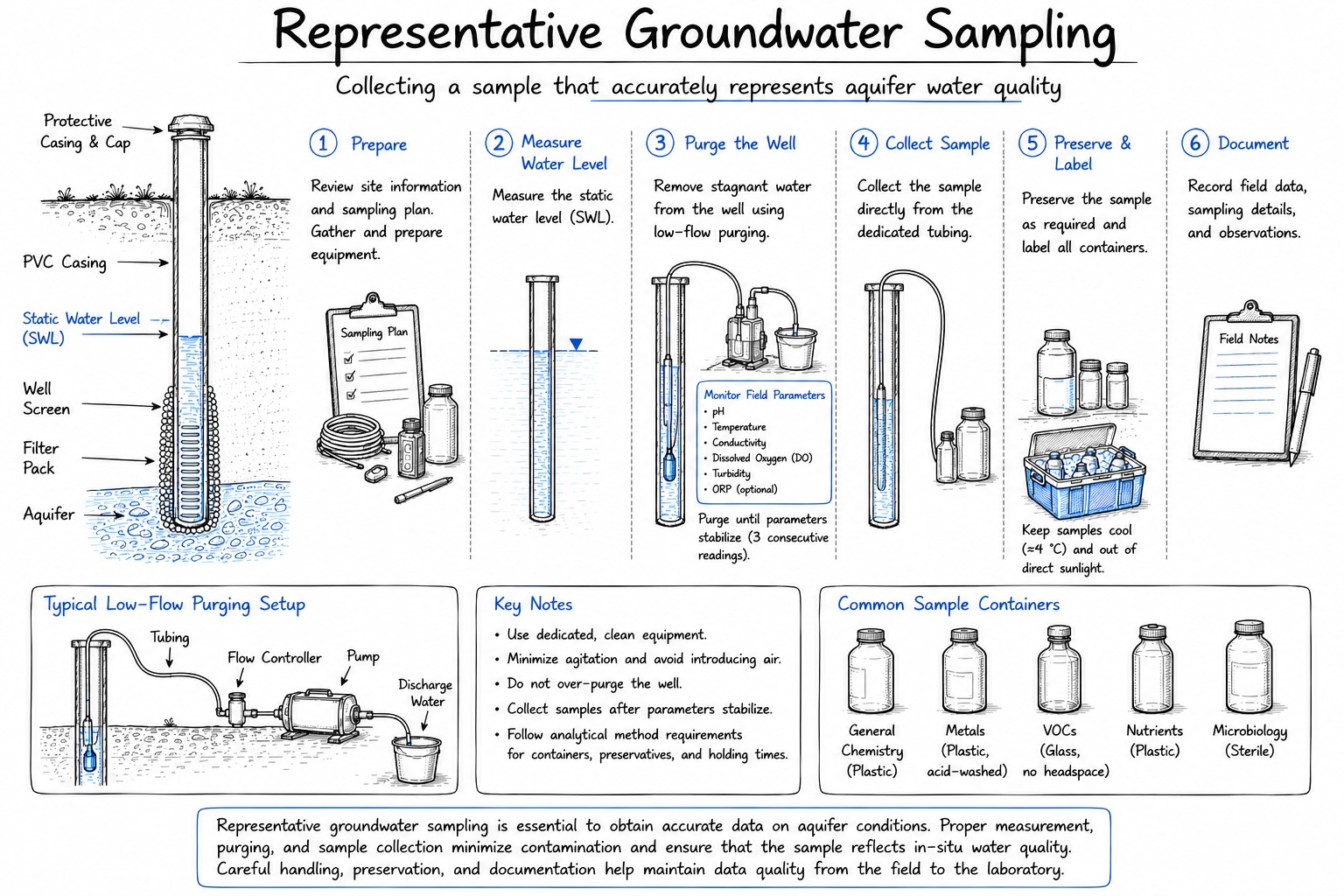
Manual measurement of groundwater levels
A simple and reliable method for monitoring groundwater levels in wells over time
Manual groundwater level measurements are performed using water level meters to determine the depth from the top of a well to the groundwater surface. These measurements provide essential information on groundwater fluctuations, aquifer recharge and discharge, seasonal trends, and the impacts of pumping or climate conditions on groundwater systems.
Learn more →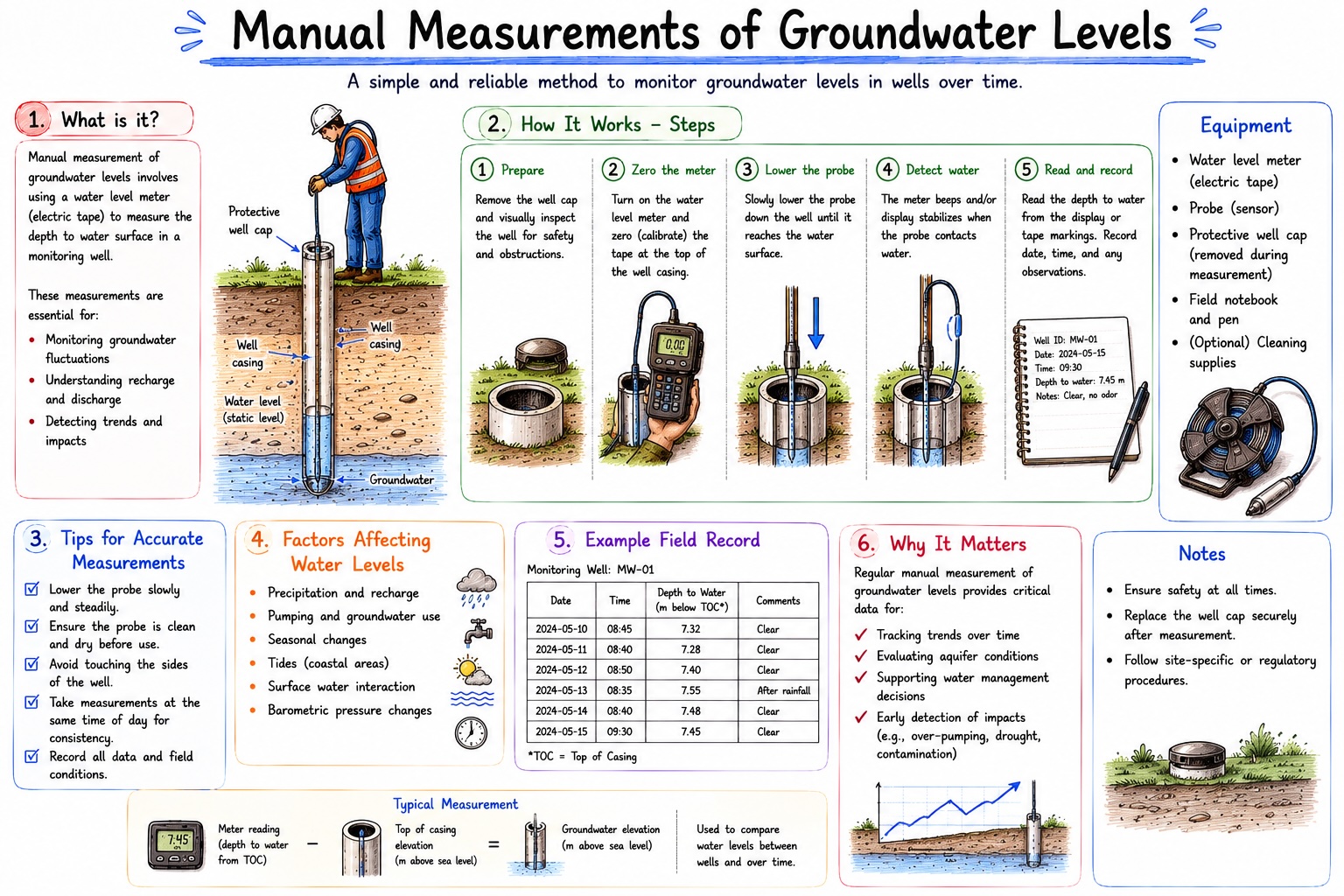
Groundwater monitoring using sensors
Continuous and automated observation of groundwater conditions using digital monitoring systems
Groundwater monitoring using sensors involves the use of pressure transducers, data loggers, and multiparameter probes installed in wells to continuously record groundwater levels and water quality. The method provides real-time, high-frequency data for groundwater management, drought monitoring, and contamination assessment.
Learn more →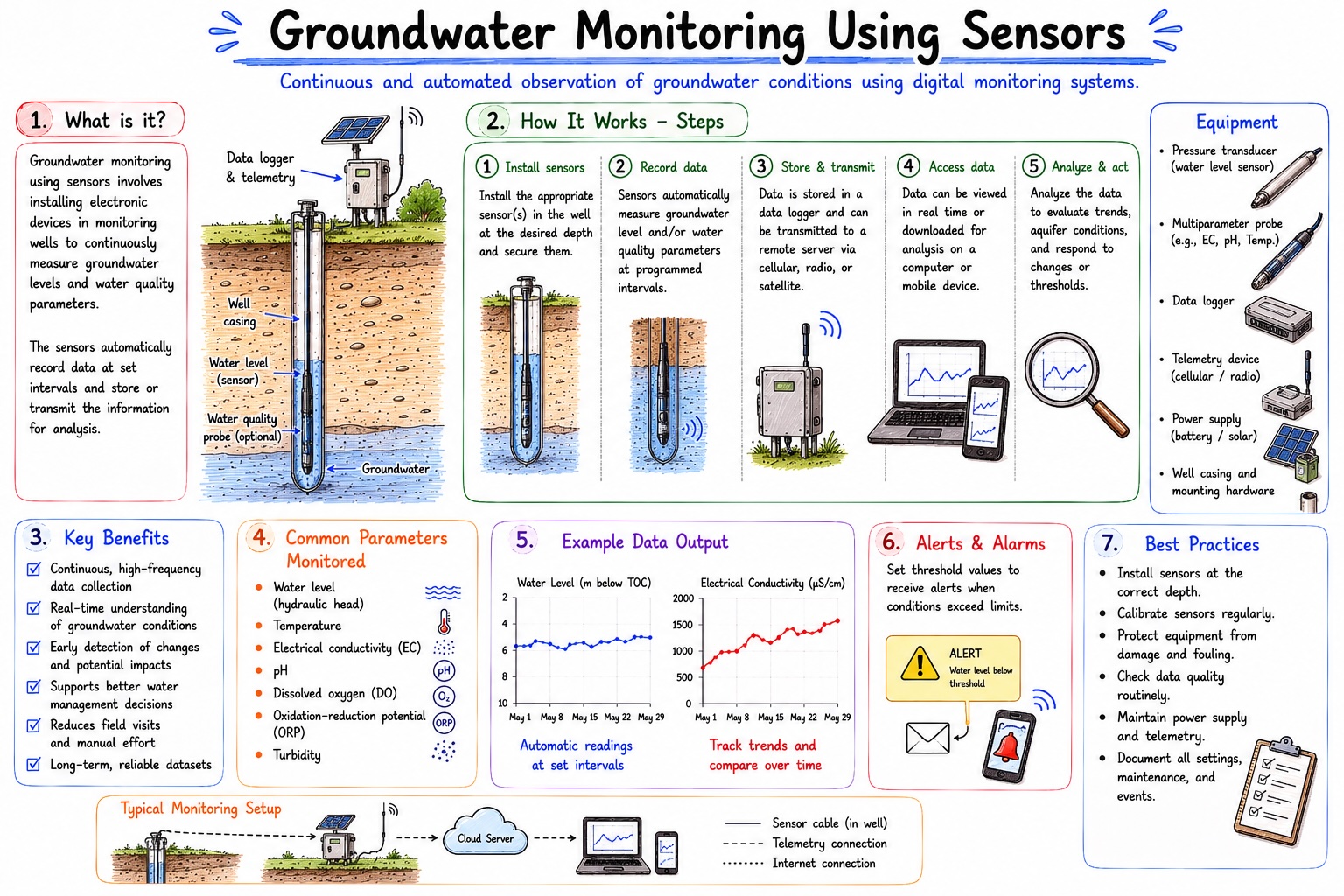
Aquifer testing techniques
Common techniques used for the characterisation of the hydraulic properties of an aquifer
Pumping (and recovery) test
Evaluate aquifer properties and well performance by pumping groundwater and monitoring drawdown over time
Pumping tests evaluate aquifer characteristics by pumping groundwater from a well and monitoring water-level changes in nearby observation wells. The results help determine hydraulic conductivity, transmissivity, storativity, and well performance.
Learn more →
Slug test
Estimate the hydraulic conductivity of an aquifer by observing water-level recovery after a sudden disturbance in a well.
Slug tests are simple field methods used to estimate the hydraulic conductivity of an aquifer near a well. The test involves suddenly adding or removing water or a solid object (“slug”) and measuring how quickly the water level returns to equilibrium.
Learn more →
Constant-head injection test
Field method for estimating aquifer hydraulic conductivity under controlled injection conditions
Constant-head injection tests are used to determine the hydraulic conductivity of an aquifer by injecting water into a well while maintaining a constant water level. The required injection rate is measured and used to evaluate the permeability and hydraulic properties of the surrounding geological formation.
Learn more →
Tracer test
Track groundwater flow paths and velocities using natural or artificial tracers introduced into the aquifer
Tracer tests use natural or artificial tracers to study groundwater flow direction, flow velocity, recharge areas, and hydraulic connectivity between wells, aquifers, rivers or springs. Tracers may include dyes, salts, isotopes, or fluorescent compounds.
Learn more →
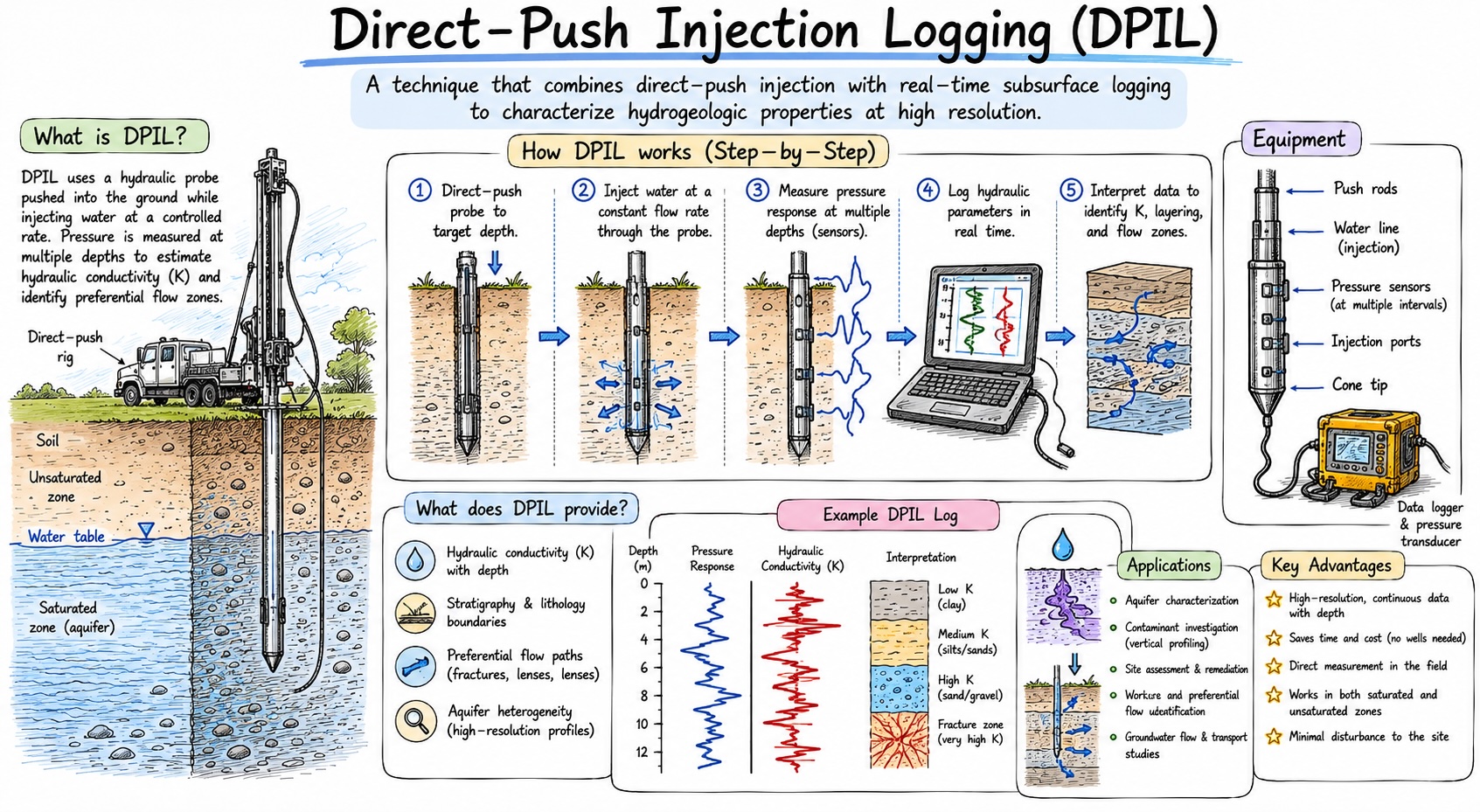
Direct-push injection logging
A high-resolution in-situ method for characterising subsurface hydraulic properties and flow zones
Direct-Push Injection Logging (DPIL) is a field-based hydrogeological technique used to investigate subsurface hydraulic conductivity and geological heterogeneity at high vertical resolution. The method combines direct-push technology with controlled water injection and real-time pressure monitoring to identify aquifer layers, preferential flow paths, and low-permeability zones without installing permanent wells.
Learn more →